Electrical in Columbus, OH
EV Charger Installation in Columbus, OH
Charging at home or work becomes easier with a properly installed EV charger.
A standard outlet can make overnight charging drag on for far too long, especially if you drive daily or share charging time with more than one vehicle. You may notice the cord warming up, the breaker tripping, or the battery still not where it should be by morning. When that starts happening, it usually means your home setup is not keeping up with the way you use your EV.
A dedicated charger changes that experience fast. Redline Electric Co helps homeowners in Columbus set up reliable EV charger installation so charging fits into the routine instead of interrupting it. We can help you figure out where the charger should go, what your electrical panel can support, and what needs to be updated before the unit is installed.
Charging problems
Homeowners usually start looking into EV charger installation after one or more of these issues show up:
- Slow charging: The car gets power, but not enough to make overnight charging practical.
- Frequent breaker trips: The circuit cannot handle the demand of charging and other household loads at the same time.
- Cord inconvenience: Extension cords and awkward parking positions make charging feel temporary instead of permanent.
- Inconsistent results: Some nights the battery finishes charging, and other nights it does not.
- Outlet concerns: A standard receptacle was never intended to act as a regular charging station.
If any of that sounds familiar, the next step is not to keep pushing the same setup harder. It is to look at the home electrical system and install charging the right way.
What we install
EV charger installation is not just about mounting a box on the wall. It is about matching the charger to the car, the home, and the way you actually park and drive. Redline Electric Co helps homeowners get a setup that feels straightforward to use from day one.
Common setup points
- Garage placement: This keeps charging protected, organized, and close to the vehicle.
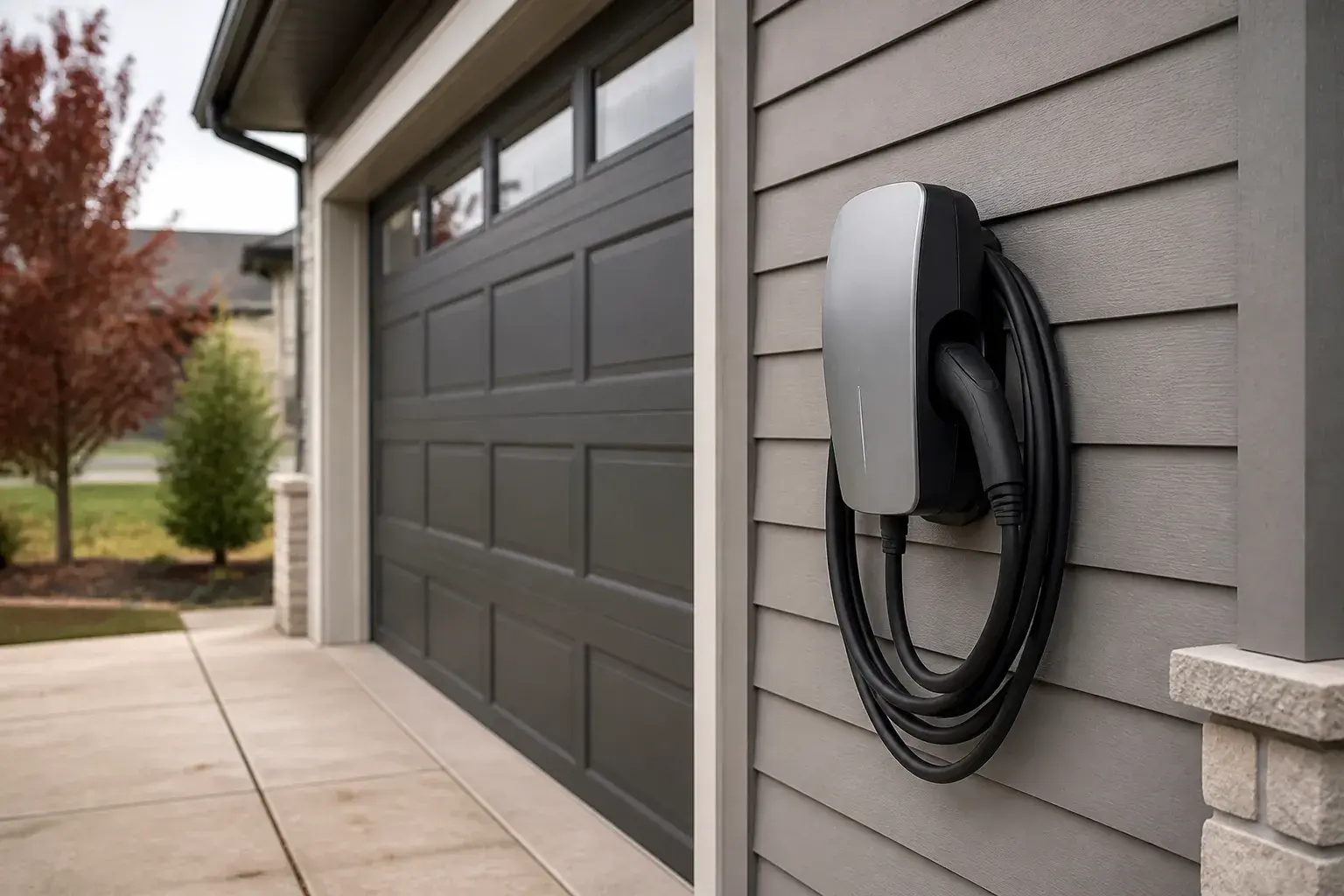
- Exterior mounting: This works well when the vehicle is parked outside and a garage location is not practical.
- Dedicated circuit: A dedicated circuit helps the charger operate without competing with other loads on the same line.
- Panel capacity review: If the panel is already heavily used, it may need attention before installation can move forward.
- Cord reach: We look at how far the charging cable needs to stretch so the setup feels natural every time you plug in.
The goal is to make charging feel simple, not improvised. A well-planned install reduces hassle and gives you a cleaner, more usable setup.
Before installation
The electrical system has to support the charger you want, and that means looking beyond the charger itself. A wall unit may be the visible part of the project, but the real work often starts at the panel.
- Check the available capacity: We look at how much space your panel has for a new dedicated load.
- Review the intended charger: Different EVs and charging units place different demands on the system.
- Choose the location: The best spot is the one that lines up with how you park and how the cable will be used.
- Plan the wiring route: The path from the panel to the charger should be practical, tidy, and suited to the home.
- Confirm the final setup: Once the electrical side is planned, the installation can move forward without avoidable surprises.
If the panel does not have enough room or the load is already close to its limit, that issue should be addressed first. Redline Electric Co can help you understand what needs to happen before the charger goes in.
How installation works
A good installation should feel orderly from start to finish. We focus on making the process clear so you know what is happening and why.
Step 1: Site review
We look at where the charger will go, how far it is from the panel, and whether the space supports a clean installation.
Step 2: Electrical planning
We determine what the circuit needs and whether the home is ready for that addition.
Step 3: Install and connect
We set up the charger, run the wiring, and connect it to the dedicated circuit.
Step 4: Test the setup
We verify that the charger powers on and operates as expected so you can start using it with confidence.
This kind of installation should not feel like a workaround. It should feel like the home was built for it, even if the charger is a new addition.
Panel and wiring concerns
Some homes are ready for EV charging with only a new circuit. Others need more attention because the panel is already busy with lighting, appliances, and other loads. That is where electrical repairs or panel upgrades may come into the conversation.
Here are a few signs the electrical system needs a closer look before charger installation:
- Limited breaker space: There may not be a clear spot for a new breaker.
- Repeated overloading: The home already struggles when several high-demand devices run at once.
- Outdated wiring conditions: The wiring path may need correction before a charger can be safely connected.
- Poor charger placement options: The ideal mounting location may be far from the existing electrical setup.
When that happens, the solution is not to force the charger into an inconvenient location. It is to plan the electrical work so the charger fits the house and the way you use it.
Why homeowners upgrade
People usually move forward with EV charger installation for very practical reasons. The benefits show up in everyday convenience, not just in a spec sheet.
- Overnight convenience: You can charge while the car sits at home instead of working around public station hours.
- Better routine: Plugging in at home removes one more stop from the day.
- Cleaner setup: A permanent charger looks and functions better than a temporary charging arrangement.
- More dependable charging: A dedicated circuit reduces the guesswork that comes with using a basic outlet.
- Easier parking habits: When the charger is installed in the right spot, parking and charging become one smooth motion.
If you rely on your EV for commuting, errands, or family travel, a home charger can make the vehicle feel much easier to own.
Local service areas
Redline Electric Co provides EV charger installation in Columbus and nearby communities including Dublin, Westerville, and Hilliard. If your home is in one of these areas, we can help you plan a charging setup that fits the property and the panel.
Whether the charger belongs in a garage or outside parking area, the same basics matter: proper circuit planning, a sensible location, and wiring that supports regular use without added stress.
Common questions
Do I need a dedicated circuit for an EV charger?
Yes, in most cases a dedicated circuit is the right way to support regular home charging. It keeps the charger from sharing power with other loads that could interfere with performance.
Can an EV charger go outside?
Yes, many charging setups can be installed outside when that is the best place for the vehicle. The location still needs to be planned carefully so the unit is practical to use day after day.
What if my panel is already full?
That is something we can evaluate before installation begins. If the panel has limited capacity, a different electrical solution may be needed before the charger is added.
How do I know where the charger should be mounted?
The best location is usually the one that matches where you park and how the charging cord will reach the vehicle. A good placement keeps the setup simple and easy to use.
Can you install a charger if the car is parked in a narrow space?
Yes, as long as there is a workable path for the wiring and enough room to use the charger comfortably. The layout just needs to be planned around the space you actually have.
Will a home charger make charging faster than a regular outlet?
Usually, yes. A dedicated charger is designed for that purpose, while a standard outlet is not built to handle charging as efficiently or conveniently over time.
Get started
If charging your EV at home feels slow, awkward, or unreliable, it is time to make the setup work better for you. Redline Electric Co can help you choose a practical installation plan and get the charger connected the right way.
For homeowners in Columbus and the surrounding service area, a properly installed charger turns charging into a simple part of the day instead of another thing to manage.
How We Work
A Clear Electrical Process From Start to Finish
Every project starts with a careful look at the issue and a direct explanation of what comes next.
- 01
Review the Issue
We look at the panel, fixture, charger location, or repair concern before recommending a path forward.
- 02
Explain the Options
You get a clear explanation of the work involved and what makes the most sense for your property.
- 03
Complete the Work
We carry out the project carefully and leave the area clean when finished.
FAQ
Common Electrical Questions
If you have questions about your electrical project, send us a message and we will help you figure out the next step.
How do I know if I need a panel upgrade?
If your panel cannot keep up with your electrical needs or is causing repeated issues, an inspection is a smart first step. We can help you understand whether an upgrade makes sense.
Can you install an EV charger at my home?
Yes, EV charger installation is one of our services. We can review the setup and determine what is needed for the location.
Do you handle lighting projects?
Yes, we help with lighting updates and improvements for homes and businesses. That can include replacing outdated fixtures or improving the way a space is lit.
What kinds of electrical repairs do you do?
We handle common repair needs such as faulty outlets, switches, fixtures, and other wiring concerns. If you are not sure what the issue is, we can take a look.
Do you work outside Columbus?
Yes, we serve Columbus, Dublin, Westerville, and Hilliard. If you are nearby, reach out and we can help you determine if your location is covered.
Ready for Safer Electrical Service
Tell us what is happening, and we will help you plan the right next step for repairs, upgrades, lighting, or EV charger installation.